Table of Contents
Introduction: The Core of Your Digital Experience
Choosing a Content Management System (CMS) is one of the most critical decisions for any business building a digital presence. It's the engine that powers your website, blog, and potentially your mobile apps. For years, traditional platforms like WordPress and Drupal have dominated the market. But a new, more flexible architecture is rapidly gaining ground: the Headless CMS.
Understanding the difference isn't just a technical debate; it directly impacts your site's performance, scalability, security, and ability to adapt to future technologies. So, which one is right for you? Let's break it down.
What is a Traditional CMS? (The Monolithic Approach)
A traditional CMS, also known as a monolithic CMS, couples the backend (where you create and manage content) with the frontend (the presentation layer or "head" that your visitors see). Think of it as an all-in-one package.
-
How it works: Content creation, management, storage, and presentation are all handled within a single system. When you create a blog post in WordPress, WordPress is also responsible for using its theme and template system to render that post as a webpage.
-
Examples: WordPress, Drupal, Joomla.
-
Best for: Simple websites, blogs, and small business sites where non-technical users need an easy-to-use, all-in-one solution for managing content and design.
What is a Headless CMS? (The Decoupled Approach)
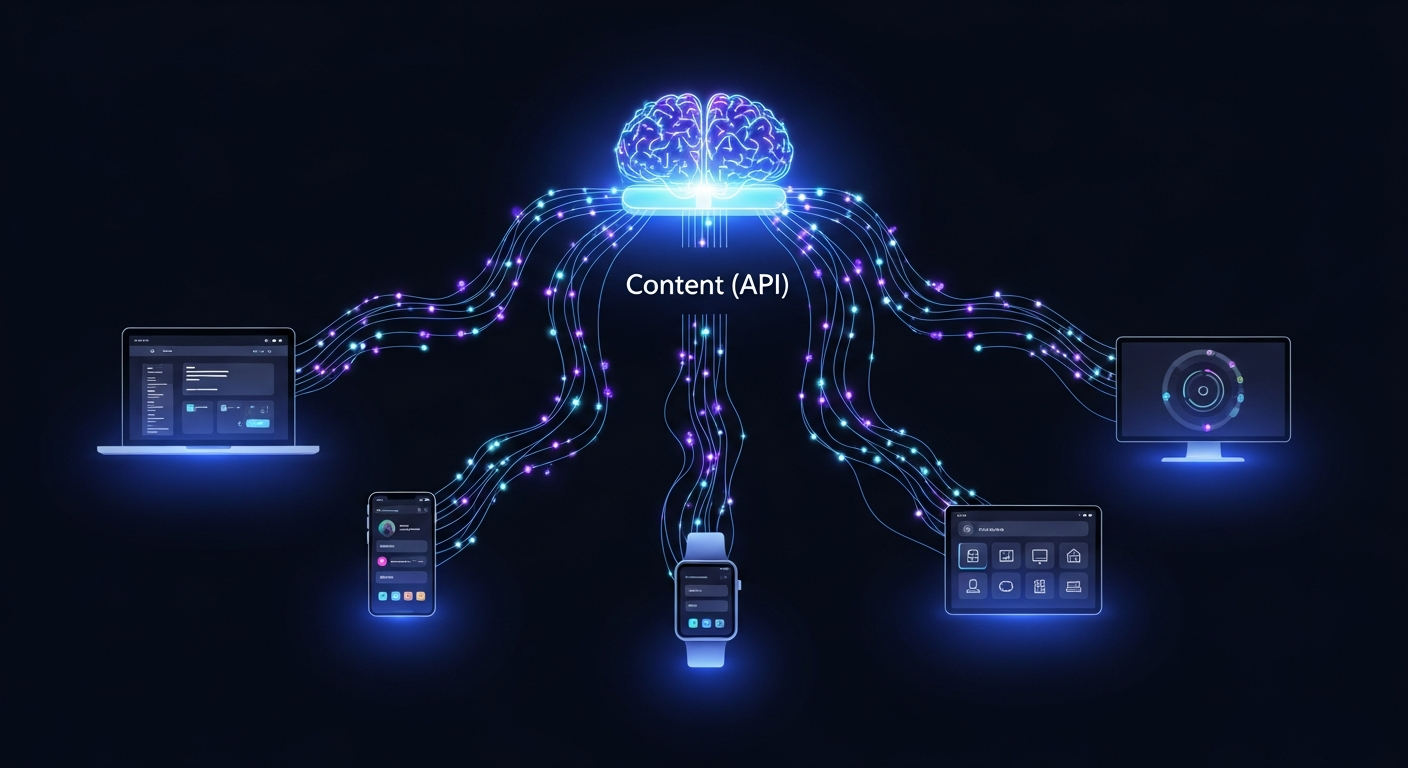
A Headless CMS is a backend-only system. It "decouples" the content management part from the presentation layer. It doesn't care how or where your content is displayed; it simply manages it and delivers it via an API (Application Programming Interface).
-
How it works: You create your content in the Headless CMS. Your developers then build a custom frontend (a website using React, a mobile app, a smart display, etc.) that "calls" the API to fetch and display that content. You have one content repository serving multiple platforms.
-
Examples: Strapi, Contentful, Sanity.
-
Best for: Omnichannel experiences, complex web applications, e-commerce sites, and businesses that prioritize performance, security, and future-proofing their technology stack.
Key Differences: A Head-to-Head Comparison
| Feature | Traditional CMS | Headless CMS |
| Flexibility | Limited to predefined themes and templates. The frontend and backend are tightly linked. | Extremely flexible. Developers can use any frontend technology (React, Vue, Angular) to build a custom experience. |
| Performance | Can be slower due to bloated code, plugins, and a database-driven presentation layer. | Significantly faster. Frontends are often built as static sites or Single Page Applications (SPAs) that load instantly. |
| Scalability | Scaling can be complex and expensive, as you must scale the entire monolithic application. | Easier to scale. The frontend and backend can be scaled independently based on traffic and load. |
| Security | More vulnerable. The entire system, including the content database, is accessible from the presentation layer. | More secure. The content management backend is separate from the public-facing frontend, reducing the attack surface. |
| User Experience | The admin interface is generally user-friendly for non-technical users. | The admin interface is clean and focused on content, but developers are required to build and manage the frontend. |
How to Make the Right Choice
Your decision should be driven by your business goals, technical resources, and long-term vision.
-
Choose a Traditional CMS if:
-
You need a straightforward website or blog quickly.
-
Your team is non-technical and needs a simple, all-in-one interface.
-
Your content will only be displayed on a standard website.
-
Your budget for development is limited.
-
-
Choose a Headless CMS if:
-
You need to deliver content to multiple platforms (web, mobile app, IoT, etc.).
-
Website performance and speed are top priorities.
-
You require a highly customized, unique user experience.
-
You have access to development resources to build and maintain a custom frontend.
-
Conclusion: Building for the Future
While a traditional CMS is still a viable option for many, a headless architecture is the clear choice for businesses looking to build fast, secure, and scalable digital experiences. It provides the flexibility to innovate without being locked into a single technology.
At Acadify Solution, we specialize in developing high-performance web and app solutions. Whether you need a robust WordPress site or a cutting-edge application built on a headless architecture, our team can guide you through the decision-making process and build a platform that aligns perfectly with your business strategy.


No comments yet. Be the first to share your thoughts!