Table of Contents
Introduction: The Blueprint for Quality Software
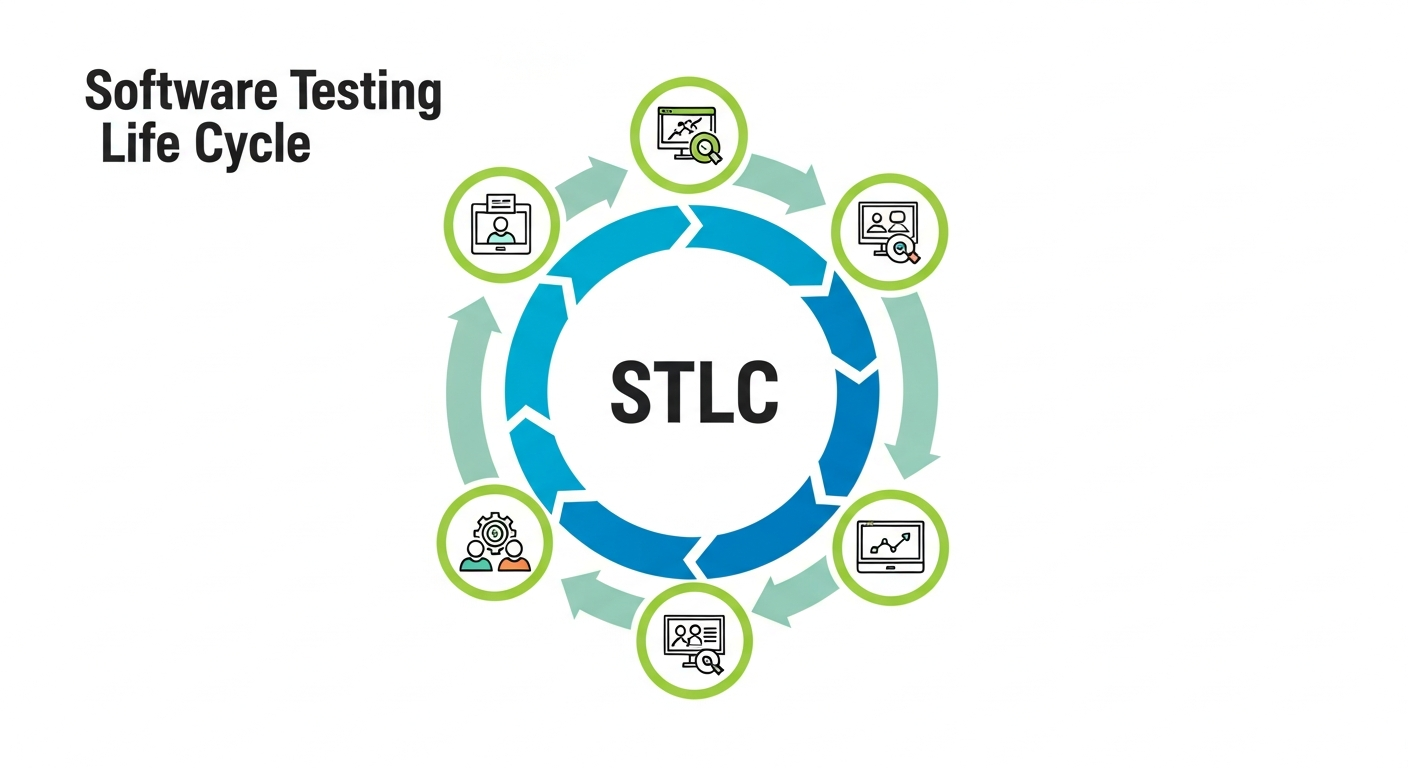
Building high-quality software doesn't happen by accident. It's the result of a systematic, phased process designed to detect and resolve defects as early as possible. This process is known as the Software Testing Life Cycle (STLC). While often mentioned alongside the Software Development Life Cycle (SDLC), the STLC is a distinct process focused exclusively on testing activities.
Understanding the STLC is crucial for any development team or business aiming to deliver a flawless product. It provides a framework for testers to ensure that software meets stakeholder requirements and is ready for release. Let's walk through each phase of this critical cycle.
The 6 Phases of the Software Testing Life Cycle (STLC)
The STLC is a sequence of specific activities conducted during the testing process. Each phase has defined entry and exit criteria, activities, and deliverables.
This is the foundational phase where the QA team dives deep into the software requirements. The goal is to understand the testable aspects and identify any ambiguities or gaps.
-
Activities: Brainstorming sessions with stakeholders (business analysts, developers), identifying types of tests to be performed (functional, non-functional), and analyzing feasibility.
-
Deliverables: A Requirement Traceability Matrix (RTM) and a clear understanding of the testing scope.
Once the requirements are understood, the Test Lead or Manager creates a comprehensive Test Plan. This document acts as a roadmap for the entire testing process.
-
Activities: Defining the test strategy, estimating the effort and cost, identifying necessary tools and resources, and defining roles and responsibilities.
-
Deliverables: Test Plan document, Effort Estimation document.
In this phase, the testing team creates the detailed test cases and scripts that will be used for execution. This involves writing step-by-step instructions to validate specific functionalities.
-
Activities: Creating test cases, writing test scripts (for automation), and preparing test data. Test cases are often reviewed by peers or business analysts.
-
Deliverables: Test Cases, Test Scripts, Test Data.
A stable and properly configured testing environment is essential for accurate results. This phase involves setting up the hardware, software, and network configurations needed to execute the test cases.
-
Activities: Configuring the test server, installing the application build, and ensuring the test environment mirrors the production environment as closely as possible.
-
Deliverables: A ready and stable Test Environment with smoke test results.
This is the phase where the magic happens. The testers execute the test cases designed in the earlier phase on the prepared environment.
-
Activities: Executing test cases (both manual and automated), logging defects for any failed cases, mapping defects back to test cases and requirements (using the RTM), and re-testing fixed bugs.
-
Deliverables: Executed Test Case reports, detailed Defect/Bug reports.
The final phase involves analyzing the entire testing cycle. The team meets to discuss the results, lessons learned, and overall effectiveness of the process.
-
Activities: Evaluating test completion criteria, preparing test metrics, and creating a final Test Closure Report.
-
Deliverables: Test Closure Report, Test Metrics.
Conclusion: A Commitment to Quality
Following the Software Testing Life Cycle isn't just about finding bugs; it's about building confidence in your product. It ensures a systematic, disciplined, and traceable approach to quality assurance. By integrating the STLC into your development process, you can significantly reduce the risk of releasing a faulty product, save costs by catching defects early, and ultimately deliver a better user experience.
At Acadify Solution, our software testing services are built upon the proven principles of the STLC. We provide end-to-end quality assurance, from requirement analysis to final reporting, ensuring your application is robust, reliable, and ready for the market.


No comments yet. Be the first to share your thoughts!